
A practical visit checklist
- Medication list: names, dose labels, and any other medicines or supplements you want to discuss.
- Recent timeline: dose dates and the dates of observations you want to remember.
- Symptoms or changes: what you noticed, when it started, and how it changed.
- Progress information: weight or other routine signals only if they are relevant to your discussion.
- Questions: the concerns, instructions, or follow-up steps you want clarified.
MedlinePlus recommends bringing a list of medicines, questions, and concerns, and writing down symptom descriptions before an appointment.
Organize the timeline
| Section | What to bring | Purpose |
|---|---|---|
| Medication | Medication names, dose labels, and recent dates | Gives the visit a clear factual starting point |
| Observations | What you noticed, when it started, and how it changed | Reduces reliance on memory during the appointment |
| Progress | Weight or routine signals you chose to track | Brings factual context when it is relevant to the discussion |
| Questions | Concerns, instructions to clarify, and follow-up questions | Helps you use limited appointment time deliberately |
| Next steps | Notes you take during the visit and any written instructions | Creates a record of what you understood and need to revisit |
Turn logs into a reviewable report
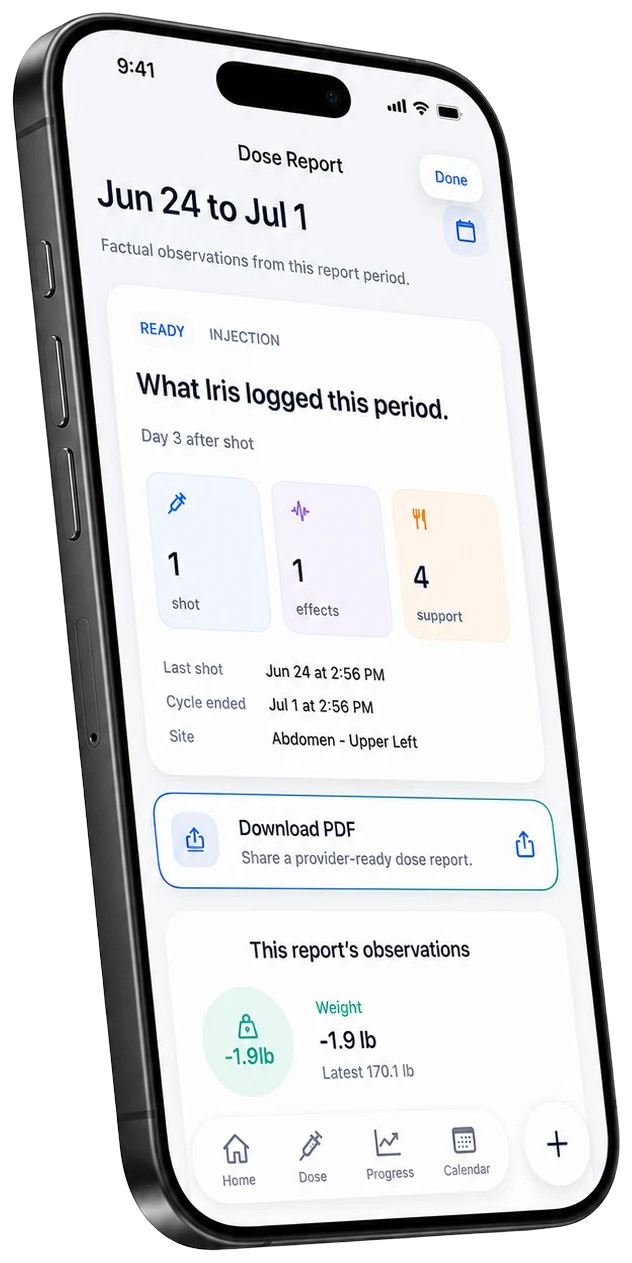
Iris brings dose history, observations, support records, and progress context into a Dose Report you control.
Keep the boundary clear
Iris helps organize your own record. It does not prescribe, verify doses, interpret symptoms, recommend treatment, or replace licensed care.
Sources
Common questions
Bring your medication list and dose labels, recent dose dates, observations you want to discuss, relevant progress information, and a written list of questions.
No. Iris keeps the record under your control. You choose whether to export or share information.
No. Iris is an organizational tool and does not prescribe, verify doses, interpret symptoms, or recommend treatment.
Related guides
Keep the visit record under your control.
Use Iris on iPhone to organize your routine and prepare questions before an appointment.